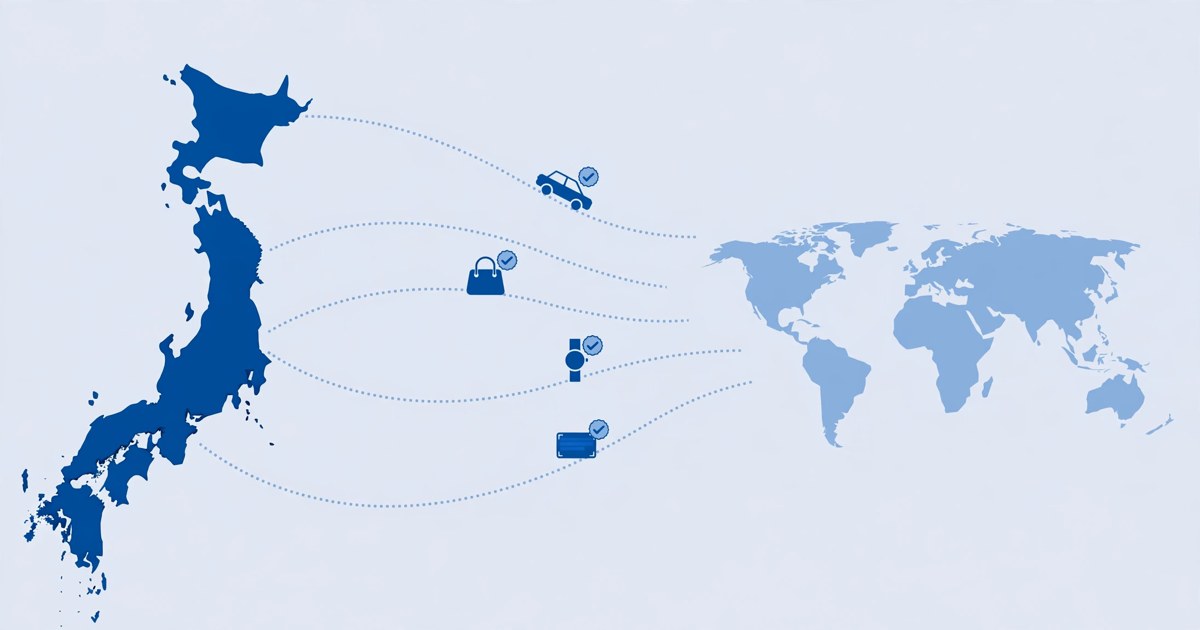
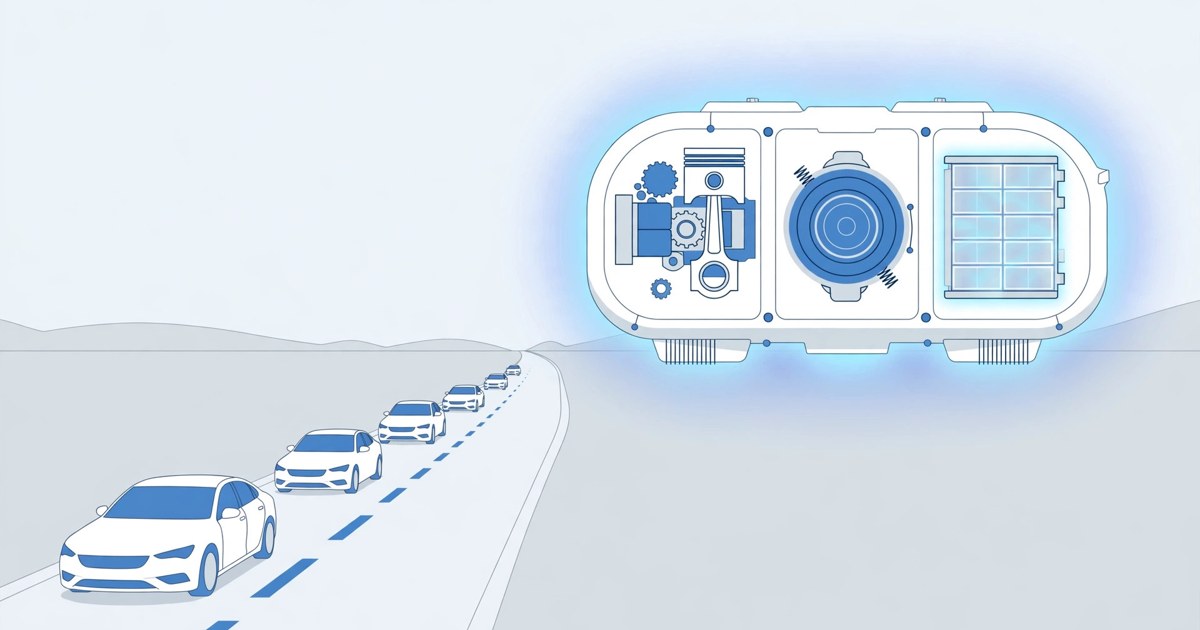
Sellers were cut on valuation. Buyers were cut on credit.
The AI boom's leverage is on the customers' balance sheets — Meta's negative cash flow, CoreWeave's credit, SoftBank's collateralised loan. Japan's equipment makers hold the margins, the pricing power and the backlogs. In October both sides were marked down; what matters is what the markdown hit.
Pages · 1/6
Sellers were cut on valuation. Buyers were cut on credit.
October sold both sides of the AI trade. On the buyer side it cut into balance sheets. On the seller side it cut only the valuation — in the same month that earnings estimates were still being raised.
Pages · 2/6
The fall is one index, not Japan
Year to date the Nikkei is still +24.5% and the TOPIX +16.3%. Foreigners have not left (weekly Ministry of Finance data).
Pages · 3/6
October, in one window
The two biggest falls belong to buyers. But Tokyo Electron and DISCO fell two to three times the index.
Pages · 4/6
Toll-booth margins are not uniform
All called "toll booths", but the tolls differ: the scarcer the bottleneck, the higher the margin.
Pages · 5/6
Guidance is rising; the tests are dated
Verification runs on leading indicators, not reported profit: Advantest and SK hynix on 28 October, Tokyo Electron and SCREEN's orders on the 30th, TSMC's monthly revenue on 10 November.
Pages · 6/6
October sold both sides of the AI trade. On the buyer side it cut into balance sheets. On the seller side it cut only the valuation — in the same month that earnings estimates were still being raised.
The Nikkei closed on 23 October 13.4% below its June record close; the TOPIX just 1.3% below its own. October sold both sides of the AI trade. But the buyers were cut on their balance sheets, the sellers only on valuation — in the same month their earnings forecasts were still being raised.
Key takeaways
- The fall is narrower than the headline. On the same June baseline the Nikkei is −13.4% and the TOPIX −1.3%. In a uniform October window (30 September → 23 October closes), both sides fell; the biggest falls were CoreWeave (−37.7%) and SoftBank (−33.5%).
- The buyers were cut on the balance sheet. Meta's Q3 free cash flow turned to −$2.12bn as long-term debt climbed to $80.9bn. CoreWeave's CDS passed 1,100bp. SoftBank has $64.6bn into OpenAI, plus a $10bn loan collateralised by that stake.
- The sellers were cut on valuation. Four equipment makers' forward P/Es are back to 25–35x from roughly 39–51x at the June peak, while earnings estimates point up: among the companies tracked, full-year guidance raises in 2026 stand at seven, cuts at zero (Tokyo Electron raised only its first half and is not counted).
- "Toll booth" margins are not uniform. Test and EUV inspection run at franchise levels of 46–52%; Tokyo Electron, on first-half guidance, is at 28.3%, and SCREEN, on full-year guidance, at 21.1%. The scarcer the bottleneck, the higher the toll.
- The biggest risk is stated in the open: in 2022, share prices topped about two quarters before equipment billings did, and the seller-side evidence then looked almost exactly as it does now. So verification runs on leading indicators: Advantest and SK hynix on 28 October, Tokyo Electron and SCREEN's orders on 30 October, TSMC's monthly revenue on 10 November.
October sold both sides of the AI trade. On the buyer side it cut into balance sheets. On the seller side it cut only the valuation — in the same month that earnings estimates were still being raised.
First, the cast and the chain. In this article the "buyers" and the "sellers" never meet directly — there is a layer in between.
The buyers — borrowing to build
- Meta, Microsoft, Google, CoreWeave — the side building AI data centers. Meta spent $34.9bn on capex in Q3; its free cash flow turned to −$2.12bn (company definition) and long-term debt rose to $80.9bn
- SoftBank — $64.6bn invested in OpenAI in cumulative terms; separately, a $10bn loan collateralised by the OpenAI stake itself (Reuters). The collateral and the bet are the same asset
- This side is betting AI pays later. If the bet fails, the debt stays here
The middle layer — taking orders, adding capacity
- TSMC, SK hynix, Samsung — the equipment makers' direct customers are not the cloud companies; they are these three. TSMC raised its 2026 capex guide to $60–64bn and reiterated it unchanged on 15 October
- SK hynix set 2026 investment in the high ₩40tn range and signed long-term agreements of up to about five years with some ten customers
- This layer's order book decides whether the third layer eats. For now, it is still adding
The sellers — building equipment, collecting cash
- Advantest, DISCO, Lasertec, Tokyo Electron, SCREEN — the test and production equipment every advanced chip must pass through. Paid in cash, with orders accumulating
- This side holds no AI debt. Its risk is not on the balance sheet; it is in orders — and risk has to cross the middle layer to reach it
Money flows one way: the buyers borrow, the middle layer expands, the sellers collect.

The fall is one index, not Japan
The Nikkei's high was not an intraday flicker; it was a close: 72,366.34 on Thursday 25 June 2026 (Nikkei Indexes). From there the index held above 70,000 into early October, then stepped down. The worst day was 15 October, −4.90%, a sixth straight fall. On the 23rd the index was down more than 1,400 points intraday before closing −0.34% (Jiji).
Breadth was poor but not a collapse: on the 22nd, 2,092 issues fell and 1,404 rose, with 13 of 33 sectors up. And foreigners did not run — net purchases of ¥3.55tn in the week to 10 October, net sales of only ¥66.5bn in the week to the 17th (Ministry of Finance, via Reuters). What fell in October was a price-weighted index concentrated in AI names, and the AI chain itself. The question is how much each layer of that chain was sold.
October, in one window
Set one window for everyone — the 30 September close to the 23 October close — and the picture is more complicated than the headline.
The top of the table belongs to the buyers — the two borrowing to build had their credit repriced first. But the sellers were not spared: Tokyo Electron fell 3.3 times the index, DISCO 2.3 times. Advantest's −5.6% looks resilient until you note it printed an all-time closing high (¥41,850) on 6 October; from that peak it is down 22.7%. The dividing line is not who fell. It is what was cut on each side.
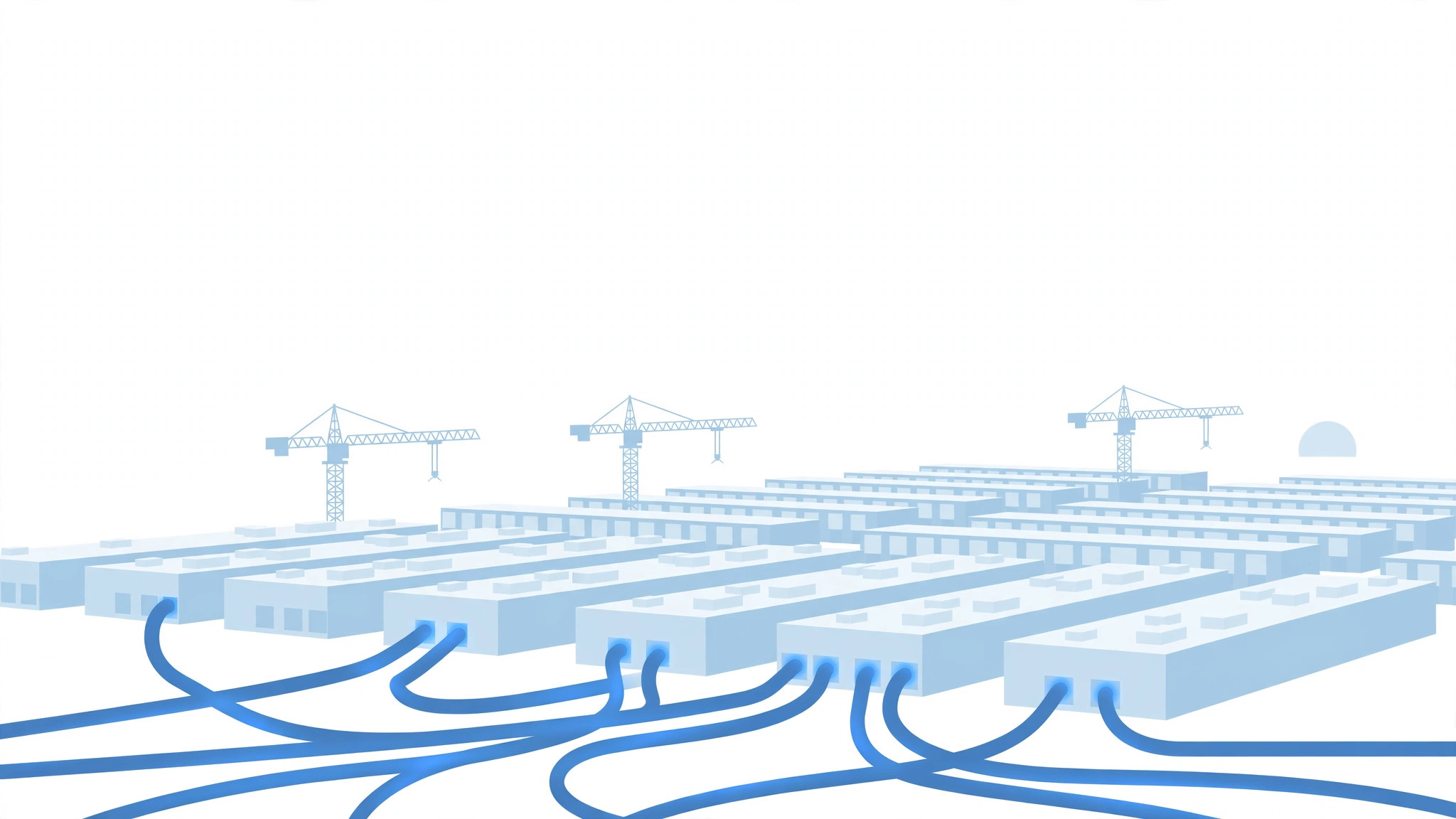
Where the risk is: the buyers
+3.7%
US CPI for September, year on year, released 14 October
Above the 3.6% expected. The trigger: the borrowers' money stays expensive
-$2.12bn
Meta free cash flow, Q3, reported 21 October (company definition)
One quarter of $34.9bn capex pushed it negative. Long-term debt has risen to $80.9bn from $58.7bn at the end of 2025
1,100bp+
CoreWeave 5-year CDS, mid-October (Reuters)
Through 1,100bp intraday, peaking near 1,195bp; the 2031 notes touched a 16% yield. Credit markets are pricing the borrower, not the chip
$10bn
SoftBank's loan collateralised by its OpenAI stake, August 2026 (Reuters)
A different transaction from the $10bn investment completed on 1 October. The collateral and the bet are the same asset
Every picture is the same picture: the strain sits on the balance sheets of the side building the infrastructure. And the buyers are not pausing — on the day it reported negative free cash flow, Meta raised the floor of its 2026 capex guidance from $130bn to $135bn. That money flows first to the middle layer — TSMC's 2026 capex is set at $60–64bn (raised in July, reiterated on 15 October), SK hynix's in the high ₩40tn range — and then becomes the third layer's orders. The sellers keep saying the same thing: they cannot build fast enough. ASML said on 14 October that its planned supply for 2027 and 2028 will still not meet demand; Lam Research guided above expectations too.
Where the profit is: the sellers
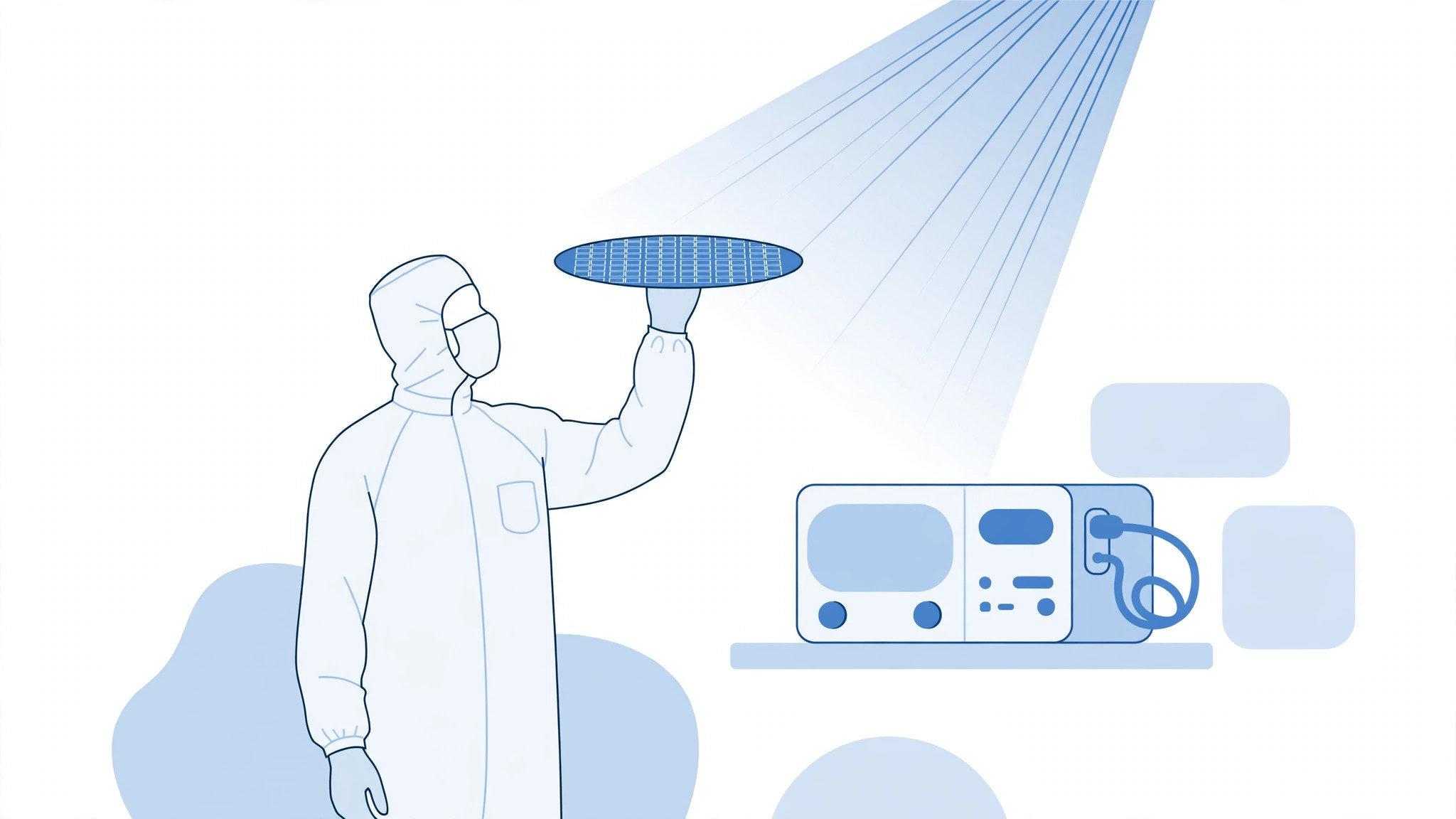
Say it plainly: the "toll booths" do not charge the same toll. Testers (about two-thirds of the SoC tester market) and EUV inspection are near-unique passages, and their margins run at 46–52%. Etching and cleaning have rivals, and their margins sit at 21–28%. These are not commodity-cyclical margins — but they are not one uniform toll table either.
Around the booths sits a ring of beneficiaries that needs no toll metaphor.
54.0%
Keyence operating margin, Q1 (April–June 2026)
Operating profit up 44.7%. Sensors and measurement are a different good business. Keyence gives no full-year guidance, by policy
15–35%
Murata's April price increases
High-end MLCCs for AI servers. Utilisation at 90–95%, and the capex plan raised to ¥255bn
Visibility sits on this side too (SCREEN's orders are at record levels, below). But Lasertec's orders take one to two years to become revenue — and that lag cuts the other way in the next section.
Raised guidance in 2026: seven full-year raisers
- Advantest raised the full year on 29 July: sales ¥1,714bn, operating profit ¥846bn, on record test demand
- Sony raised operating profit to ¥1,720bn. Fujikura raised twice (18 June and 7 August), most recently to sales ¥1,755bn and operating profit ¥432bn. Ibiden raised operating profit 41% to ¥127bn. Murata raised to record sales of ¥2,110bn and operating profit of ¥430bn
- SCREEN raised full-year sales to ¥743bn, with orders at record levels
- FANUC raised on 23 October itself: sales ¥1.01tn and net profit ¥228.3bn, both records, citing China-led factory automation and AI data-center demand
Listed separately: first half only
- Tokyo Electron raised its first-half forecast on 30 July — sales ¥1.62tn, operating profit ¥458bn. It guides in stages, so it stays out of the full-year count above
Profits under pressure, for stated reasons
- Kioxia Q1 operating profit of ¥1.27tn was price-led: average selling prices up about 70% quarter on quarter while bit shipments grew only low single digits. It missed consensus
- Lasertec full-year profit fell on the one-to-two-year lag from orders to revenue. But orders rose 125.7% and the backlog is ¥322.96bn
- SoftBank Group is the exception that proves the split: a Japanese company on the buyers' side (details in the section above and the appendix)
No full-year guide, by policy
- DISCO guides one quarter ahead. On 22 October it set October–December shipment guidance at ¥149.6bn
- Keyence gives no full-year guidance
Industry forecasts point the same way: SEMI expects total equipment sales of $165.9bn in 2026, up 23.2% and a record. Vendor wafer-fab numbers use different definitions and should not be blended, but none points down.
The peak was expensive
One honest sentence first: the June peak was expensive.
Even on today's upgraded earnings estimates, the peak carried 39–51x. The de-rating back to 25–35x is real. But part of the P/E decline came from the denominator growing — the July round of guidance raises — not from price. Separate the two, and the defensible claim is this: the sellers' valuations were cut far more than their earnings. Their earnings were not cut at all.
The strongest counterargument: this thesis's biggest risk
The most dangerous objection to this article is not "AI is a bubble". It is a fact about dates: equipment share prices top before the fundamentals do.
That is what 2022 looked like. Prices peaked in December 2021; by October 2022 the SOX was down 46.5%, and Tokyo Electron and Advantest had fallen roughly 58% and 52% (ADR basis). Yet SEMI's equipment billings set a record in 2022 — $107.6bn, up 5% — and the decline, when it came in 2023, was only 1.3% for the year. Prices topped about two quarters before billings. Worse: the "seller evidence" on the table in early 2022 looked almost exactly like today's — full order books, raised guidance, rising customer capex. If the sequence repeats, October's strong orders and upgrades prove nothing. This is the single biggest risk to the argument above, and it belongs here, not in a footnote.
The present tense already has its footnote: DISCO reported record shipments on 22 October and its shares made a new low for the year the next day. Takahide Kiuchi of Nomura Research Institute warns that the top five cloud companies' 2026 capex will exceed their operating cash flow, making AI investment "increasingly susceptible to financial market conditions" (via Dow Jones, 15 October).
Two things differ from 2022, and only two. First, the middle layer's capex was reiterated and raised after the sell-off began — TSMC held $60–64bn unchanged on 15 October, and the long-term agreements now run to about five years. Second, the buyers' credit has already moved — CoreWeave's CDS is pricing the risk where it actually sits. But be clear about the lag: one to two years from orders to revenue is a delay, not an exemption. If the middle layer turns, equipment names will still be hit first. That is why the tests below watch leading indicators, not reported profit.
The call
Our reading
October sold both sides. What it cut on the buyer side was the balance sheet: negative free cash flow, credit spreads past 1,100bp, a loan taken against the bet itself. What it cut on the seller side was only the valuation: in the month forward P/Es came back from 40–50x to 25–35x, seven companies raised full-year guidance, none cut, and the middle layer's capex was reiterated unchanged. Prices can be wrong; filings are slower to lie. If the leading indicators below turn, this call turns with them — the conditions are written down here.
Fact
Watch these leading indicators (not reported profit):
- 28 October — Advantest results (guidance and its tester-market outlook); SK hynix Q3 (capex language); Microsoft and Alphabet capex guidance (US time)
- 29 October — Amazon capex guidance (US time)
- 30 October — Tokyo Electron; SCREEN orders and backlog, quarter on quarter; Lasertec orders; Murata and TDK
- 10 November — TSMC's October revenue (then monthly, on the 10th); mid-January 2027 (expected) — TSMC sets its 2027 capex guidance
This call is wrong if any of the following happen: SCREEN's orders fall quarter on quarter with its backlog shrinking; TSMC cuts its capex range; any cloud buyer cuts capex guidance; Advantest or Tokyo Electron cuts guidance.
Three things to keep
- Ask what was cut, not who fell most. Buyers top the losers' table, but a balance sheet and a valuation are two different kinds of wound.
- A price-weighted index is not a country. A 13.4% Nikkei fall next to a 1.3% TOPIX fall from the same June base is a story about index construction and one trade, not about "Japan".
- Reported profit lies late; leading indicators don't wait. In 2022, billings set a record in the year prices fell first. Watch orders and capex guides, not last quarter's earnings.
Appendix
Brent crude. Brent near $111–112, up more than 80% this year on the Middle East situation, is a separate, older pressure on everyone. It has nothing to do with this article's classification, and is kept here for the record.
The rest of Japan. Second-quarter GDP was revised up to +1.4% annualised (Cabinet Office), with private consumption flat and capex revised to −0.9%. August real wages rose 1.5%, an eighth straight increase, while real household spending fell 3.1%, a ninth straight decline. National core CPI for September, released on 23 October, was +2.1%. The Bank of Japan is expected to hold at 1.25% on 29–30 October (Nikkei). All three megabanks forecast record profits for the year to March 2027: MUFG guides to net profit of ¥2.7tn, Mizuho raised its forecast to ¥1.4tn on 29 September, and SMFG's first-quarter net profit rose 33%. Toyota raised its forecast too, though operating profit is still expected down 9.7% year on year on tariffs. The yen stood near 157.9 on 22 October, the 10-year JGB yielded 2.920% on the 20th, and September exports rose 16.7%, short of the 20.1% forecast.
Valuation method. "Now" is the consensus forward P/E at the 23 October close (StockAnalysis): Tokyo Electron 25.2x, Advantest 35.4x, DISCO 26.0x, Lasertec 34.0x. The "peak" column is implied: the peak close divided by the same forward EPS, which isolates the multiple; because consensus EPS was lower in June, it is a lower bound on how expensive the peak was. Point-in-time anchors: Advantest at 54–56x on June consensus EPS of about ¥661 (QUICK); Tokyo Electron's trailing P/E of 56.5x at 30 June (Simply Wall St series). EV/EBIT at 23 October: Tokyo Electron 30.4x, Advantest 41.1x, DISCO 22.6x, Lasertec 31.6x.
Drawdowns from each name's own 2026 peak (closes). Tokyo Electron: ¥15,560 on 22 June (split-adjusted; ¥77,800 before the split) → ¥9,458 on 23 October, −39.2%. Advantest: ¥41,850 on 6 October (an all-time closing high) → ¥32,340, −22.7%; its highest June close was ¥35,900 on 25 June. DISCO: ¥88,480 on 22 June → ¥49,290, −44.3%. Lasertec: ¥57,490 on 22 June → ¥38,040, −33.8%. Meta: $777.59 on 24 September → $642.62, −17.4%; its highest June close was $627.57 on 4 June. CoreWeave: $124.82 on 1 June → $54.24, −56.5%. SoftBank Group: ¥8,632 on 2 June → ¥4,276, −50.5%. Tokyo Electron split 5-for-1 effective 1 October 2026 (ex-date 29 September); every price for it in this article is on the split-adjusted basis. Both ends of the October window in the main text (30 September → 23 October) are actual post-split closes and need no adjustment.
Lasertec's order history. The lag from order to recognised revenue is one to two years (Nikkei, August 2025). Orders in the year to June 2025 fell about 60% to ¥105.2bn before rebounding 125.7% in the year to June 2026 — the lag works in both directions, which is why the main text treats strong orders as a necessary condition, not a sufficient one.
SoftBank's two $10 billions. The $10bn disclosed on 1 October was the final tranche of the $30bn investment commitment made in February 2026 (cumulative $64.6bn, a stake of about 13%). The $10bn loan collateralised by the OpenAI stake is a separate, August 2026 transaction (Reuters); no primary document for its legal structure has been published, so the main text describes it only as a loan collateralised by the stake. The related $40bn bridge facility was fully repaid and cancelled on 1 October and should not be confused with either.
Sources & references
- Nikkei Indexes, Monthly Newsletter Vol. 79 (record close 72,366.34 on 25 June 2026; end-2025 close 50,339.48)
- Meta, Q3 2026 results release, 21 October 2026 (capex $34.91bn; free cash flow −$2.12bn; long-term debt $80,922mn; 2026 capex floor raised to $135bn)
- Reuters, 16 October 2026 (CoreWeave CDS and bond yields, citing S&P Global Market Intelligence); 15 October 2026 (TSMC Q3: capex $60–64bn reiterated, full-year revenue guidance raised); 22 October 2026 (SOX; Ministry of Finance weekly flows)
- TSMC Q2 and Q3 2026 earnings calls (July: capex guide raised to $60–64bn; 15 October: reiterated); SK hynix Q2 2026 call, 29 July 2026 (2026 investment in the high ₩40tn range; long-term agreements)
- SoftBank Group disclosure, 1 October 2026 (cumulative OpenAI investment $64.6bn); Reuters, August 2026 ($10bn loan collateralised by the OpenAI stake)
- Company results and forecast revisions, 2026: Tokyo Electron (30 July, first half), Advantest (29 July), SCREEN, Sony Group, Fujikura (18 June, 7 August), Ibiden (4 August), Murata (31 July), FANUC (23 October), Kioxia, Lasertec, DISCO (22 October shipments and guidance), Keyence, TDK (JPX filings and company releases)
- Tokyo Electron stock-split notice, 29 May 2026 (5-for-1, effective 1 October 2026). Price series: Finnhub daily closes, cross-checked against StockAnalysis and MarketBeat
- SEMI, equipment billings (2022: $107.6bn; 2023: −1.3%, WWSEMS); equipment forecast, 14 July 2026 (2026 total $165.9bn, +23.2%)
- ASML, Q3 2026 results, 14 October 2026 (2027–28 supply against demand); Lam Research, Q3 2026 results and guidance
- Cabinet Office, Q2 2026 GDP second estimate, 8 September 2026; Statistics Bureau CPI, 23 October 2026; Ministry of Health, Labour and Welfare monthly labour survey; Jiji Press market reports, 22–23 October 2026
Spotted an error or something out of date? Let us know via the contact page. Corrections are reflected in the updated date.
Original research and analysis by JNoted. Please cite with a link; full republication or commercial use requires prior permission.